MASTER’S THESIS · 2024

A lighter, calmer life with a heart pump

A wearable system and controller for people living with a left ventricular assist device — a pump that keeps their heart going 24 hours a day.
LVAD controller worn at the waist
ROLE

Solo project: research, product design, interface and UX, CMF, wearables

CONTEXT

Master’s thesis, Academy of Fine Arts in Kraków · Design for Extreme Environments

METHODS

Interviews, surveys, device audit, self-testing, physical prototyping and user tests

FOCUS

Daily safety, discreet checks, alarms and battery interaction

01 LVAD IN A NUTSHELL

A pump inside the body. A controller and batteries outside.

In shortLVAD supports the heart continuously, so its external equipment can never simply be taken off.
A left ventricular assist device helps a weakened heart pump blood. A cable passes through the skin and connects the implanted pump to a controller and two batteries worn around the clock.
01

Implanted pump

Supports blood flow when the heart cannot pump enough.

02

Driveline

A cable exits through the skin and carries power to the pump.

03

External kit

A controller and two batteries stay connected day and night.

Inside the bodyLVAD pump
Through the skinDriveline
Always carriedController + 2 batteries

Every day

Check power, alarms and pump readings.

Always ready

Carry a spare controller and spare batteries.

Keep it dry

No water near the controller or driveline.

For years

Many patients live with LVAD for 8–9 years or more.

02 THE PROBLEM

The pump saves lives. The equipment around it was designed for the hospital, not for everyday life.

BASIC KIT2.5 kg
Always on the body

Controller, 2 batteries

Leaving home

+ a spare controller and 2 spare batteries

Travelling

+ chargers and battery clips, dressings, carrying accessories, a shower kit, medicines and prescriptions, medical records, contact cards…

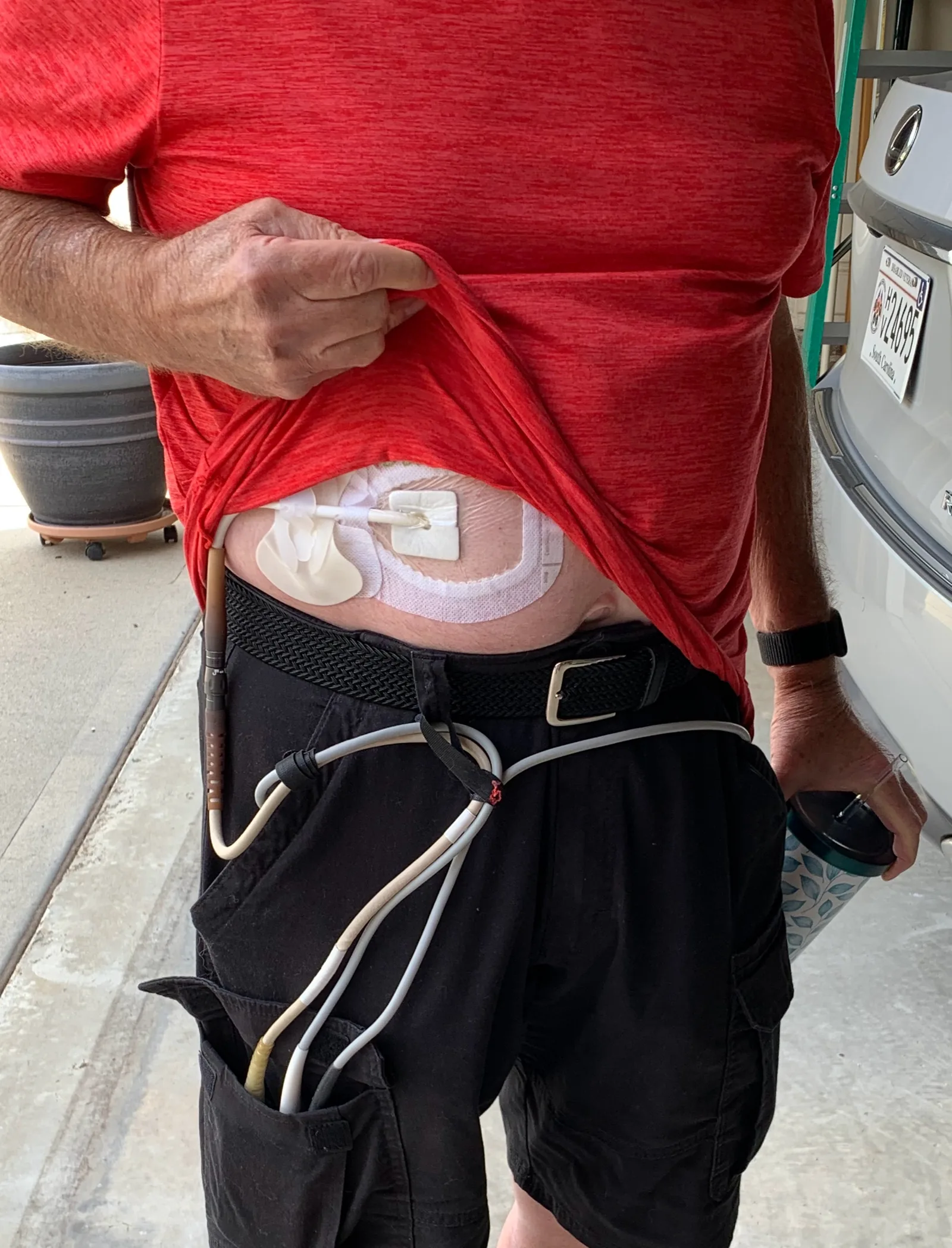
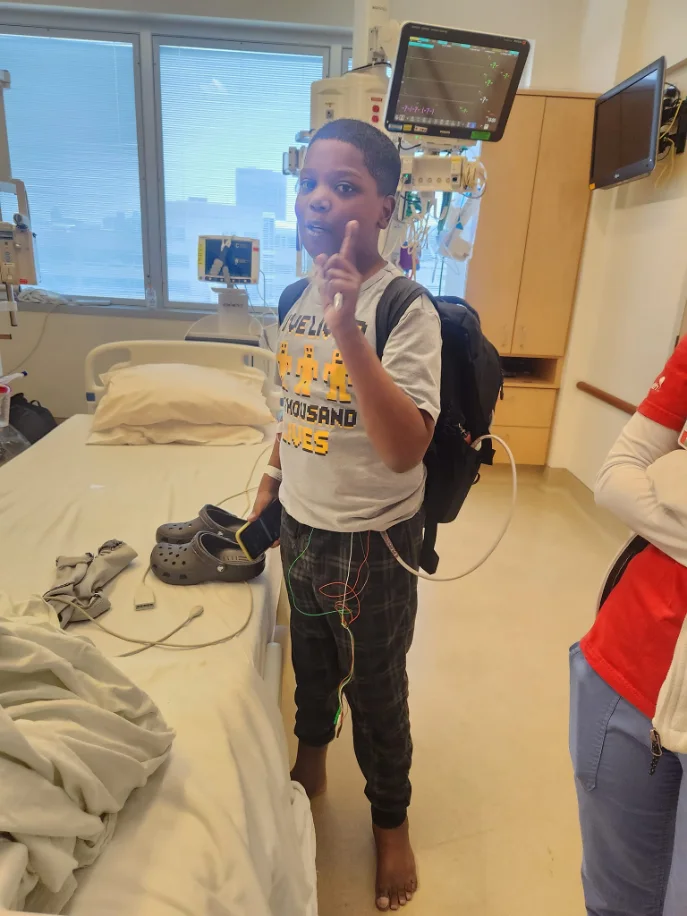
A cable comes out through the skin and connects the implanted pump to an external controller and two batteries. Patients carry them all the time, often for years while waiting for a transplant.

Weight. The basic kit weighs about 2.5 kg, and more when travelling.

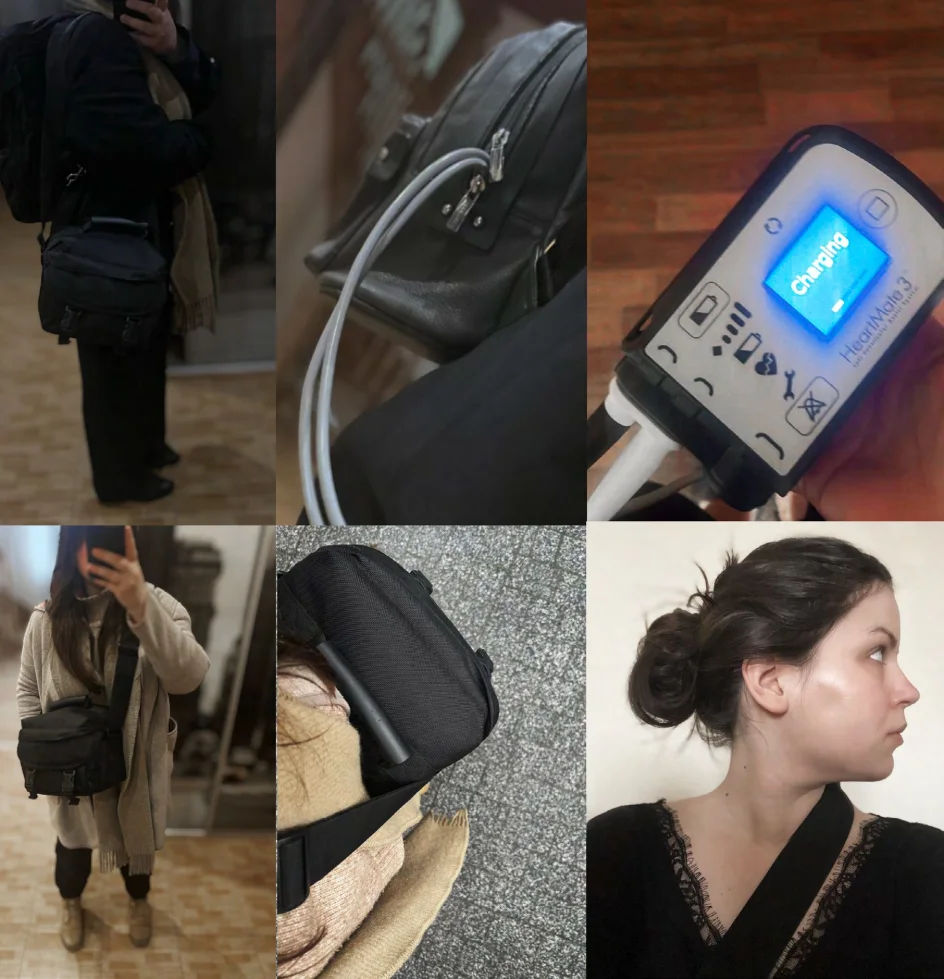
Carrying. The standard bag hangs off one shoulder and causes back and neck pain.

Clothing. There is no good place for the kit. People cut holes in clothes or sew their own vests.

Fear. The cable can catch on a door handle. A disconnection can be fatal.

Visibility. Cables and bags make the illness visible to everyone.

HOW PEOPLE COPE TODAY
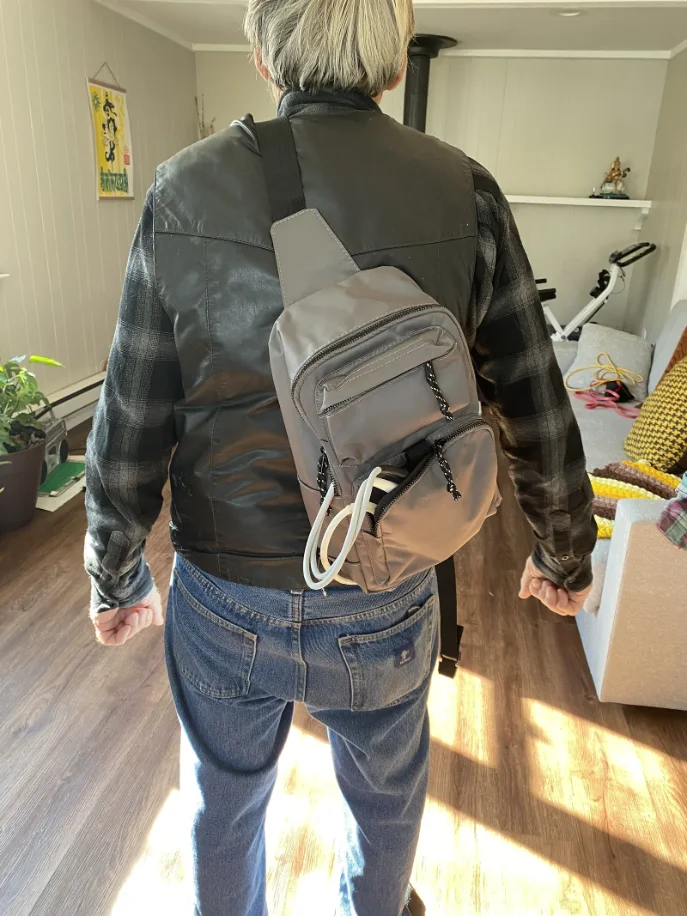
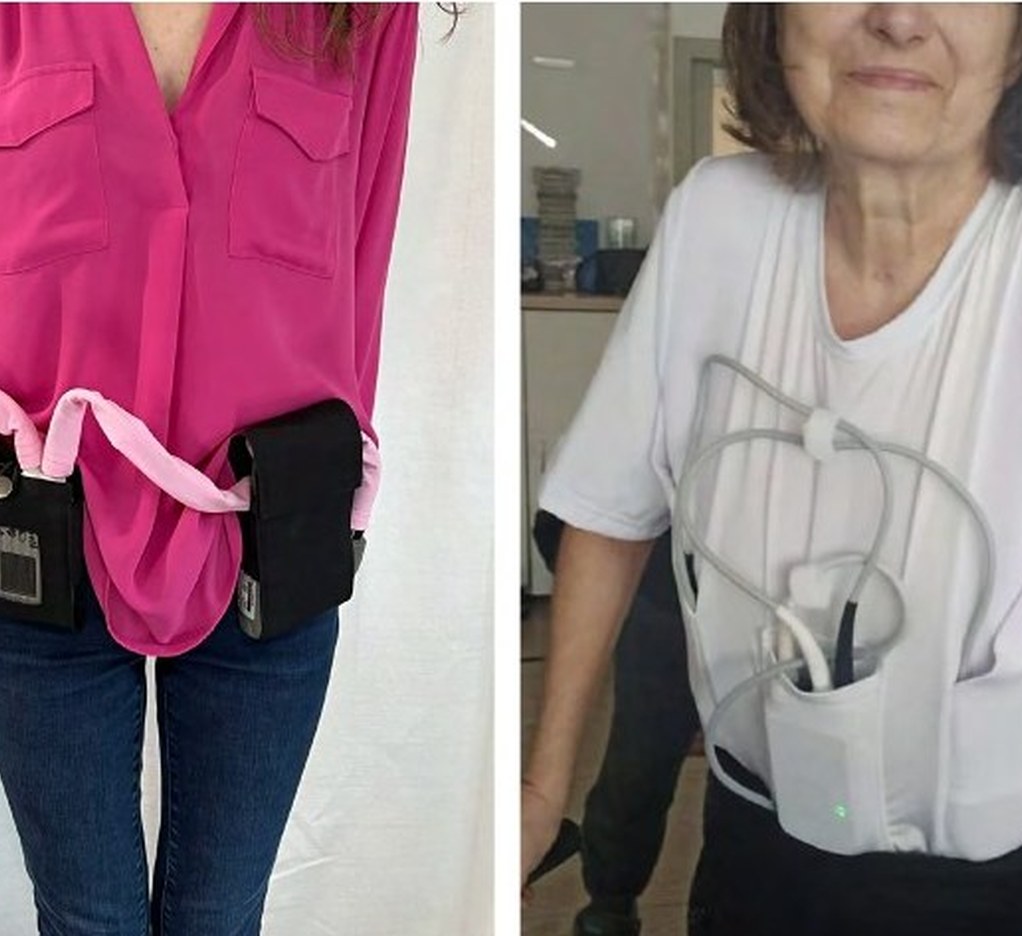
Person carrying an LVAD shoulder bagLVAD equipment worn under clothingPerson with visible LVAD cablesEveryday life with an LVAD kit
Home-made belts and shirts adapted for LVAD equipment
Home-made solutions sold online: belts with sewn-on pouches and tshirts with pockets for the controller and batteries.

My husband carries my backup bag if we’re together. He figures I’m already carrying almost 5 pounds.

LVAD patient

I am afraid to go among people, to be jerked and the driveline will come off.

LVAD patient

My husband wears his batteries on the outside of his clothes so he always gets strange looks. I’m always afraid it will be mistaken for a bomb.

Caregiver

03 RESEARCH

Six methods, including testing the device

In shortThe controller mattered, but batteries, carrying and discretion shaped daily life most.
I combined first-hand experience with patient and clinical evidence. The methods were deliberately different: what people said, what the literature showed and what the equipment did to the body.
15

LVAD users surveyed in Poland and abroad

2 in 3

rated how the device fits daily life as poor or very poor

14 of 15

asked for lower weight

Two-week self-test with the HeartMate 3 kit
Self-test: wearing the complete HeartMate 3 kit for two weeks at home and outside.
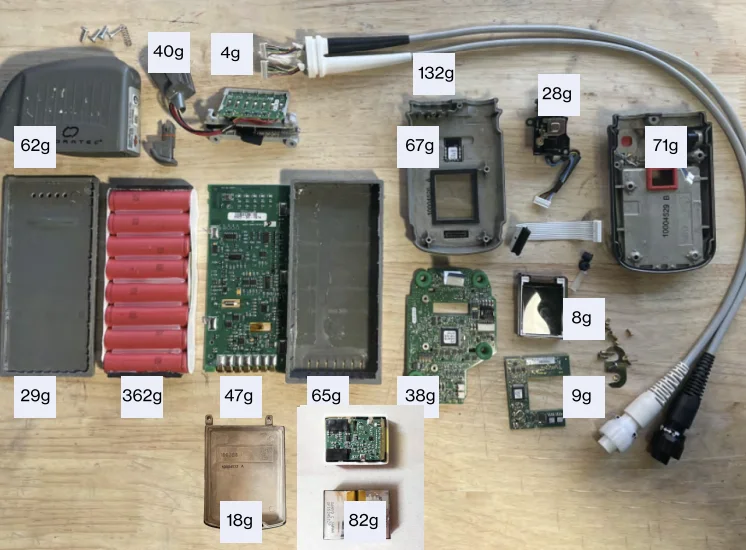
HeartMate 3 controller and battery teardown
Teardown: the controller and battery taken apart, with every part weighed.

THE SIX METHODS

01

SWOT

Carrying solutions already on the market

Existing products improve mobility, but often distribute weight poorly, offer few sizes and feel designed mainly for men.

02

Surveys

15 LVAD users, aged 20 to 80+

People valued battery life and independence, but asked for less weight, fewer cables and a better fit with clothing.

03

Interviews

Patients, specialists and VAD coordinators

The controller was unlikely to shrink soon. Clothing, carrying and battery design offered more realistic leverage.

04

Scientific sources

Studies and surveys of patients and coordinators

The carrying bag was the most criticised element, and many patients already used their own solutions.

05

Living with the kit

Two weeks wearing a complete HeartMate 3 set

Cables caught on furniture, the bag competed with everyday luggage and the load caused neck and back pain.

06

Teardown

Controller and battery taken apart and weighed

Each battery weighed more than the controller. Battery technology, not the pump, offered the clearest size and weight gain.

04 FROM RESEARCH TO A DECISION

The direction was chosen, not assumed

In shortKeep medical redundancy, reduce the kit from three main parts to two, and balance the load around the body.
I moved from a broad opportunity map to four battery architectures, then scored the viable options against weighted safety and daily-life criteria.
DESIGN HYPOTHESIS

Better integration with daily life can improve both safety and quality of life. The load has to be lighter, better carried and easier to understand.

1 · THREE POSSIBLE DIRECTIONS

Route 1CHOSEN

Adapt to today

What
Clothing and accessories for different activities
Key values
Comfort, fit, activity, modularity
Route 2NOT PURSUED

Optimise what exists

What
A better version of today’s external kit
Key values
Efficiency, ergonomics, safety
Route 3CHOSEN

A new solution

What
A device based on technology becoming feasible
Key values
Integration, miniaturisation, smart management

2 · FOUR BATTERY SCENARIOS

Scenario 01

Today

Controller + 2 external batteries

Benefit
Safe and proven
Trade-off
Heavy; three main parts
Scenario 02

Smaller batteries

Controller + 2 smaller external batteries

Benefit
Lighter and more comfortable
Trade-off
Still three parts to carry
Scenario 03CHOSEN

Built-in + one spare

Controller with a built-in battery + 1 external battery

Benefit
Lighter, balanced and redundant
Trade-off
Requires a redesigned controller
Scenario 04

Modular batteries

Controller + configurable battery modules

Benefit
Flexible and personal
Trade-off
More connections that can fail

3 · WEIGHTED DECISION MATRIX

CriterionScenario 2Smaller batteriesScenario 3Built-in + one spareScenario 4Modular batteries
Safetyweight ×5
3/3
15 pts
2/3
10 pts
1/3
5 pts
Reliabilityweight ×5
3/3
15 pts
3/3
15 pts
2/3
10 pts
Weightweight ×4
1/3
4 pts
2/3
8 pts
3/3
12 pts
Mobilityweight ×4
2/3
8 pts
3/3
12 pts
3/3
12 pts
Number of partsweight ×3
1/3
3 pts
3/3
9 pts
2/3
6 pts
Technical feasibilityweight ×2
3/3
6 pts
3/3
6 pts
2/3
4 pts
Weighted total512nd60Recommended493rd

Each scenario scores 1–3. The score is multiplied by the criterion weight; safety and reliability carry the highest weight because failure can be life-threatening.

THE DECISION

A controller with a built-in battery, plus one slide-on spare.

Two power sources preserve the redundancy a life-supporting device needs. Integrating one battery reduces the main parts from three to two and distributes weight more evenly.

05 PHYSICAL PROTOTYPING

Dozens of models, fittings and knitted samples

In shortThe controller, battery and wearable system developed together because every change affected grip, weight and access.
The process moved between the hand and the body. Open the section to see the controller, placement and knitwear tracks.
Open the physical processThree tracks · ten documented process materials
3 → 2

main parts to carry and connect

~30%

less battery volume for the same energy

90×70×17 mm

battery size chosen after body tests

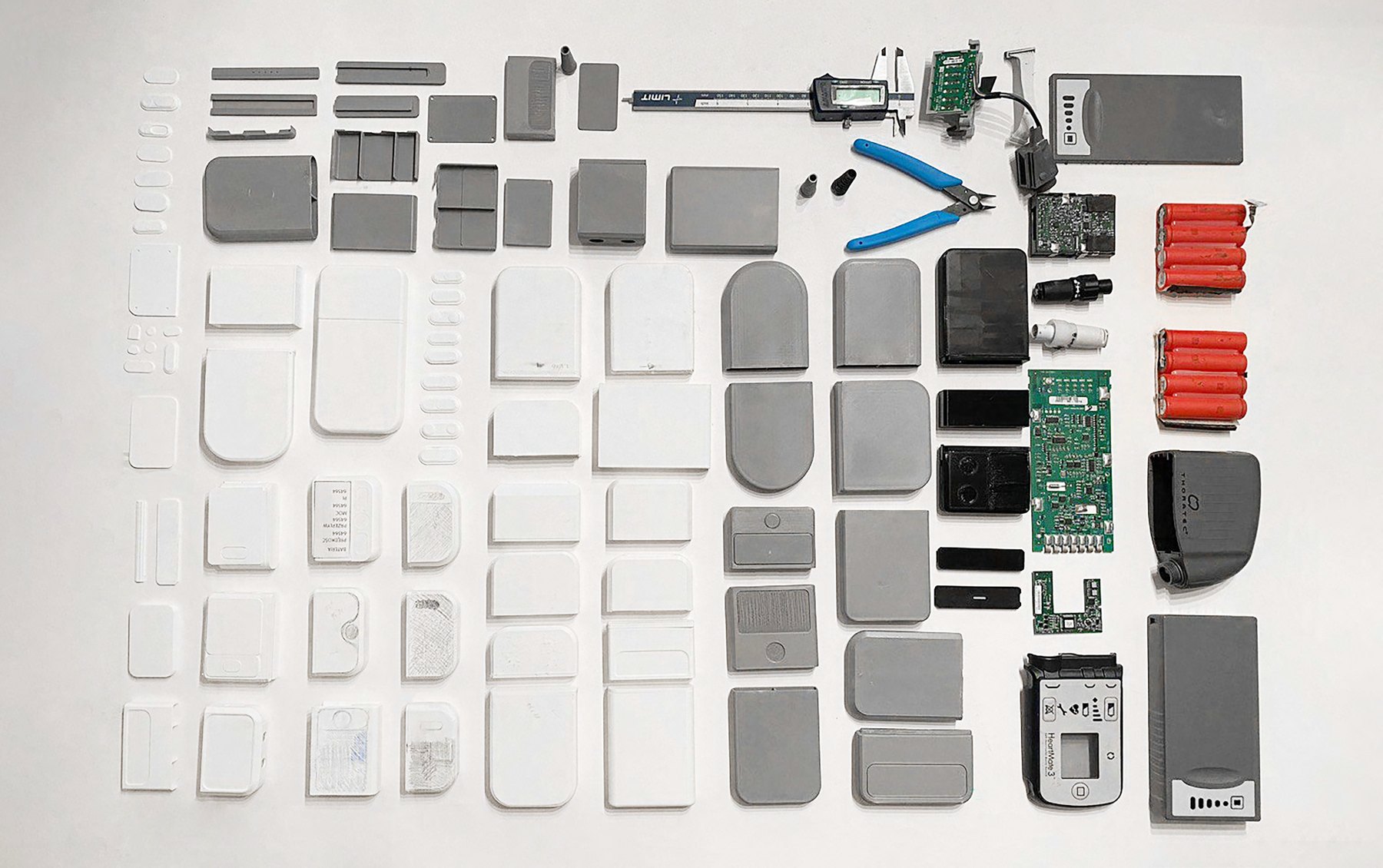
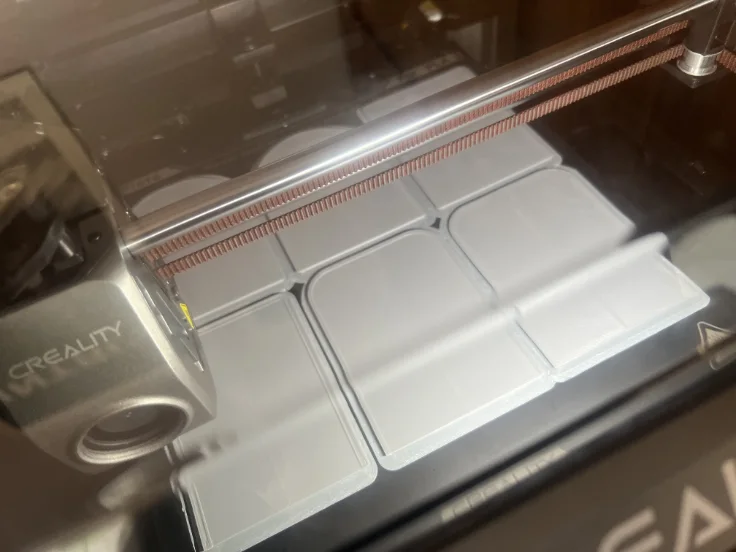
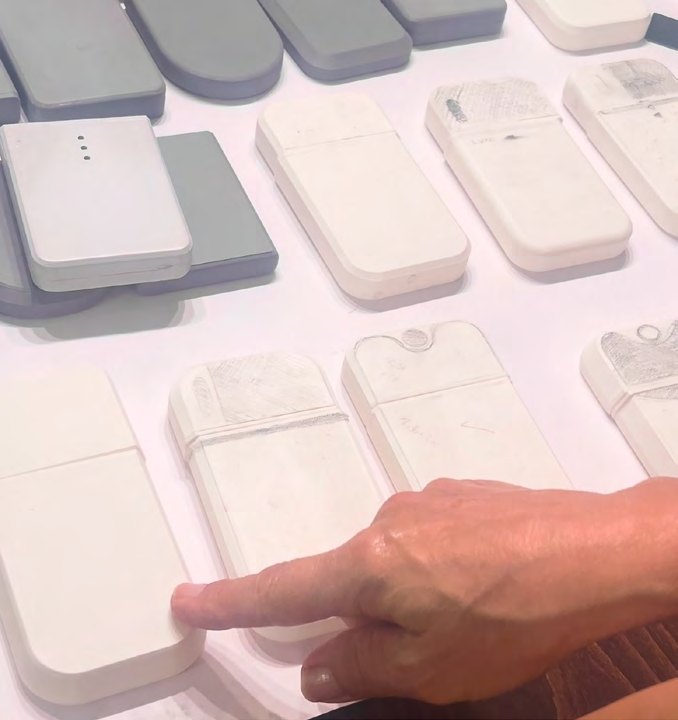
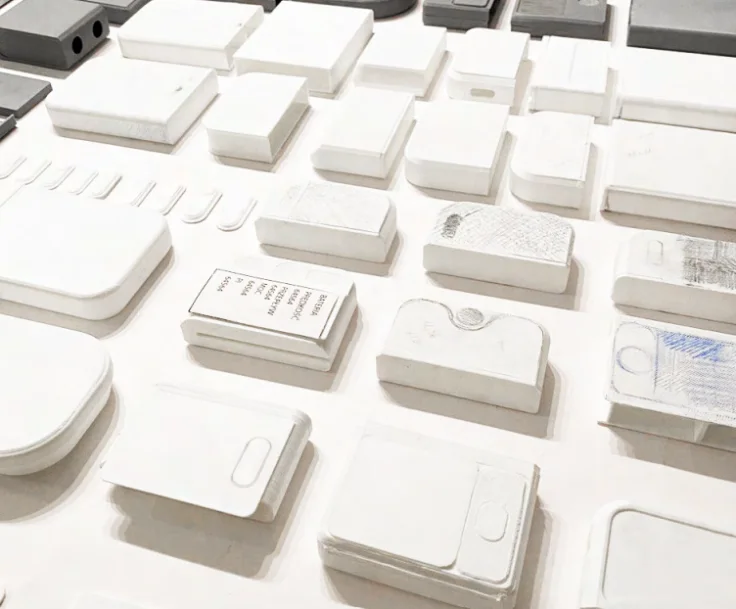
LVAD design process flat lay
Process overview: foam blocks, 3D prints, battery dummies and textile samples.
01

Controller

From sketches to foam blocks and 3D prints held by people of different ages.
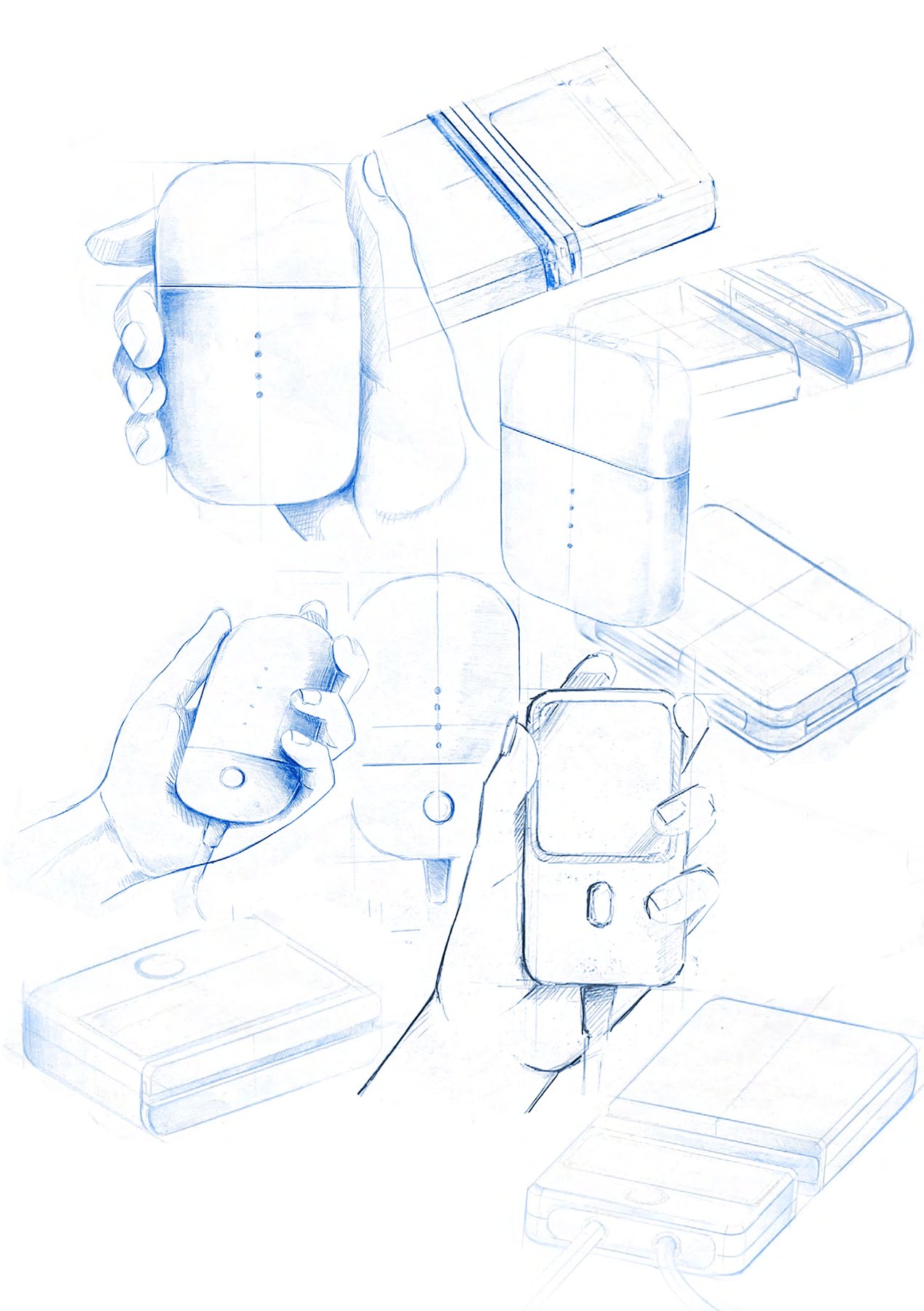
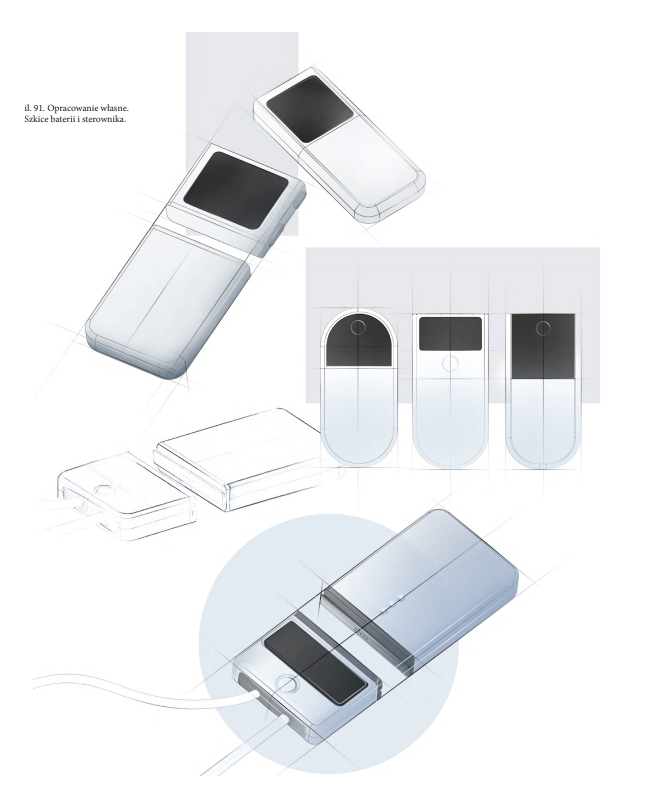
Controller sketches and interface studies
Sketches and screen studies used to compare proportions before making physical models.
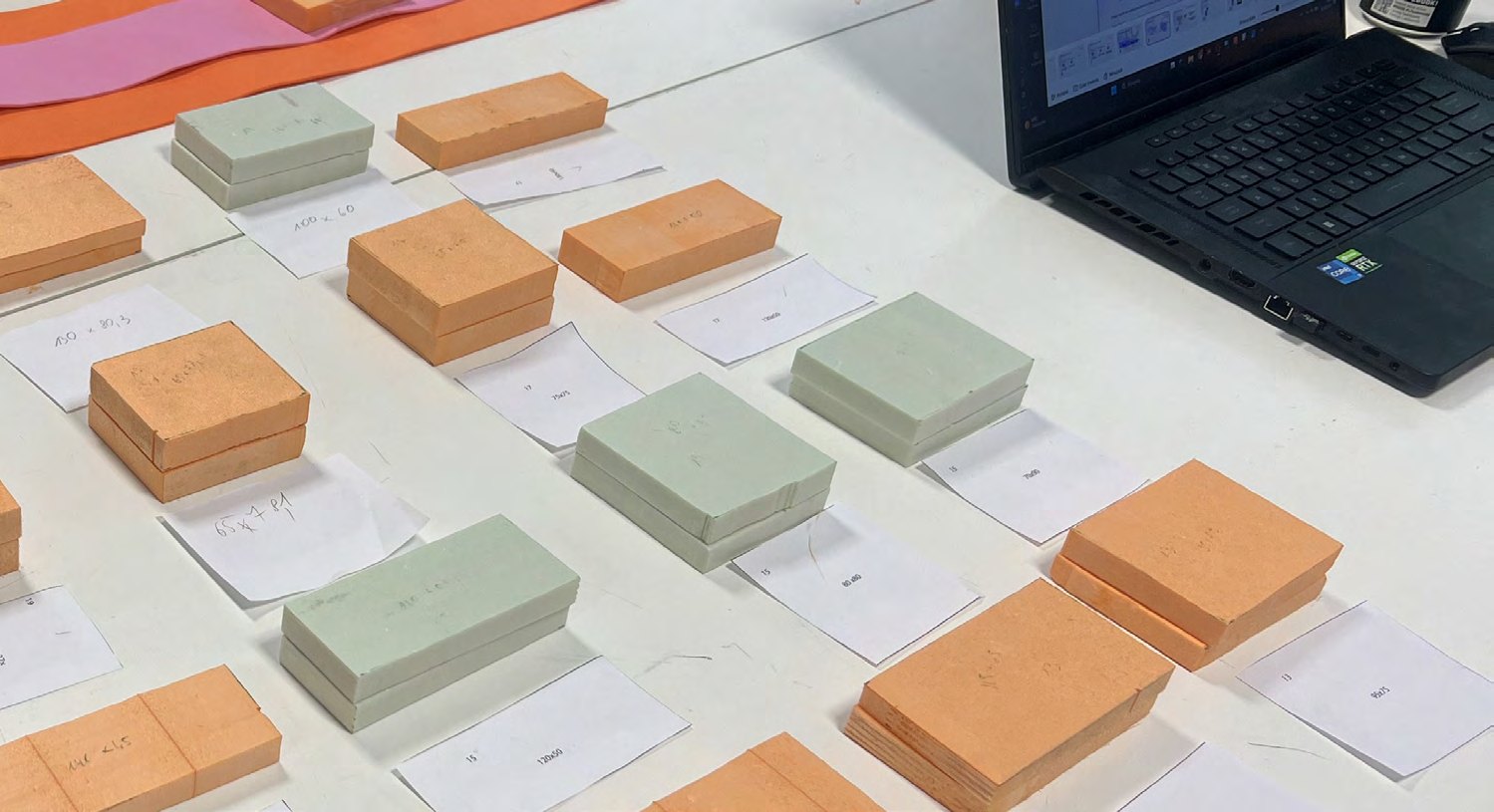
Foam controller models
Foam blocks used to compare controller size, corner radii and grip.
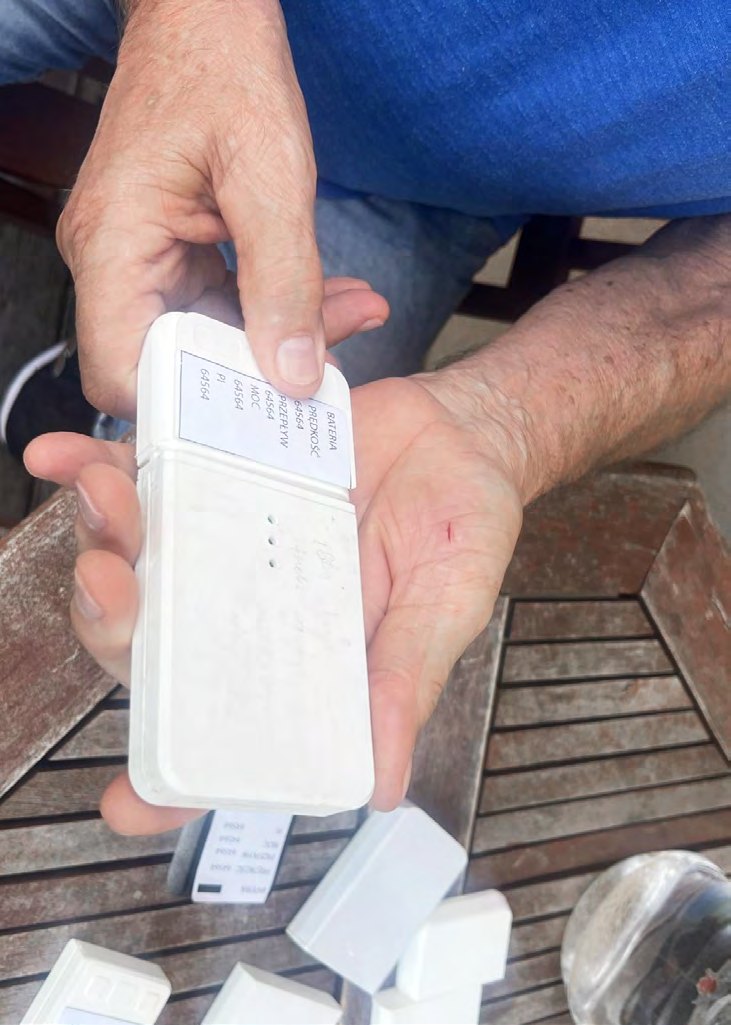
Controller model held in one hand
A 3D-printed model checked for one-handed grip and button reach.
02

Battery placement

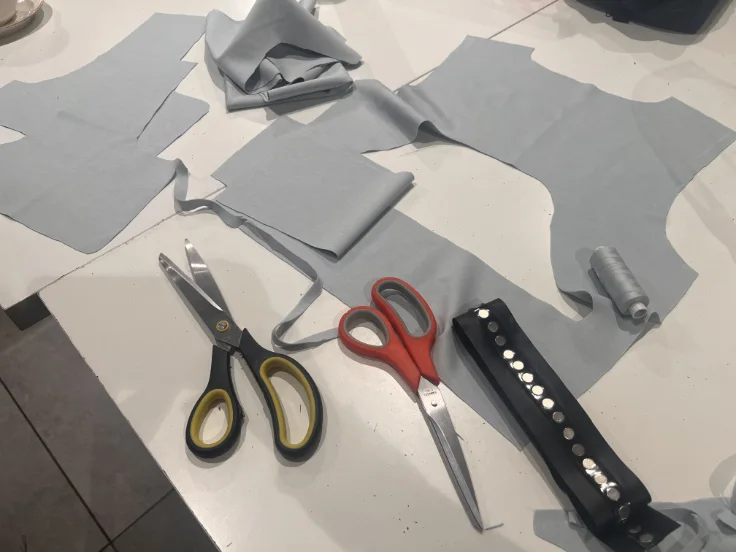
Foam batteries at the hips, waist and back; belt and vest mock-ups worn under clothes.
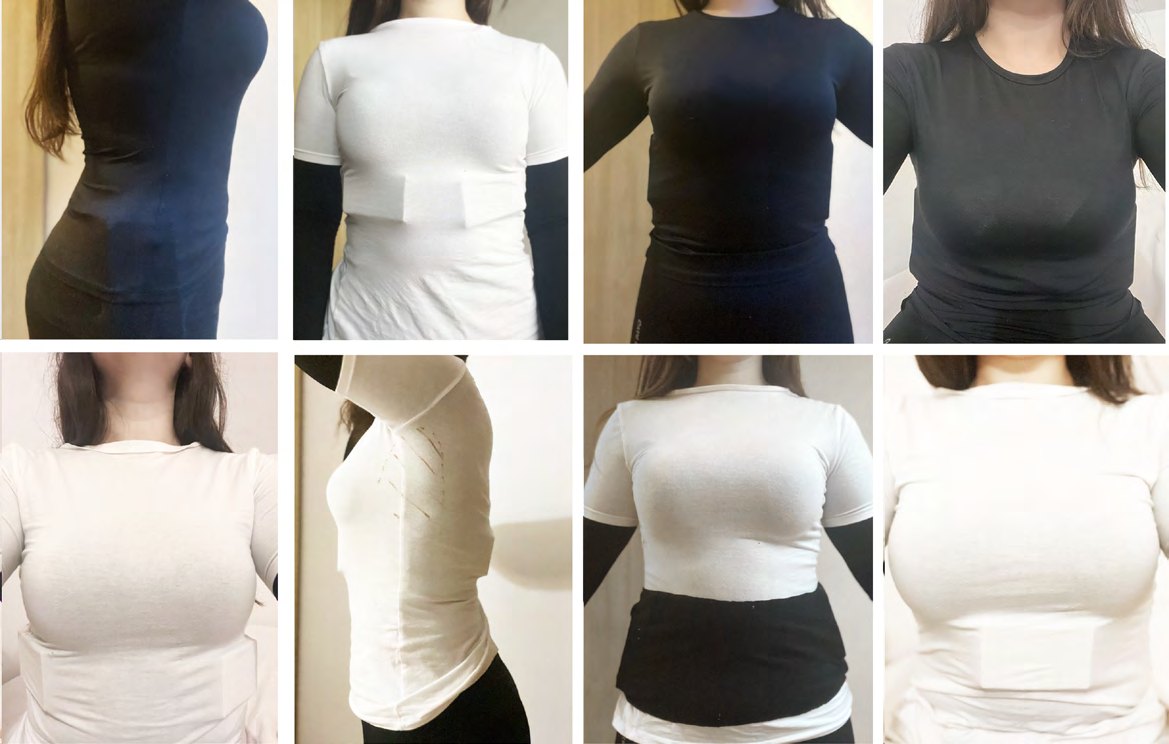
Battery placement tests
Foam battery volumes positioned at the hips, waist and back.
Wearable fitting
Wearable mock-ups checked weight distribution and access under clothing.
Wearable pattern development
Pattern development for belt and vest variants.
03

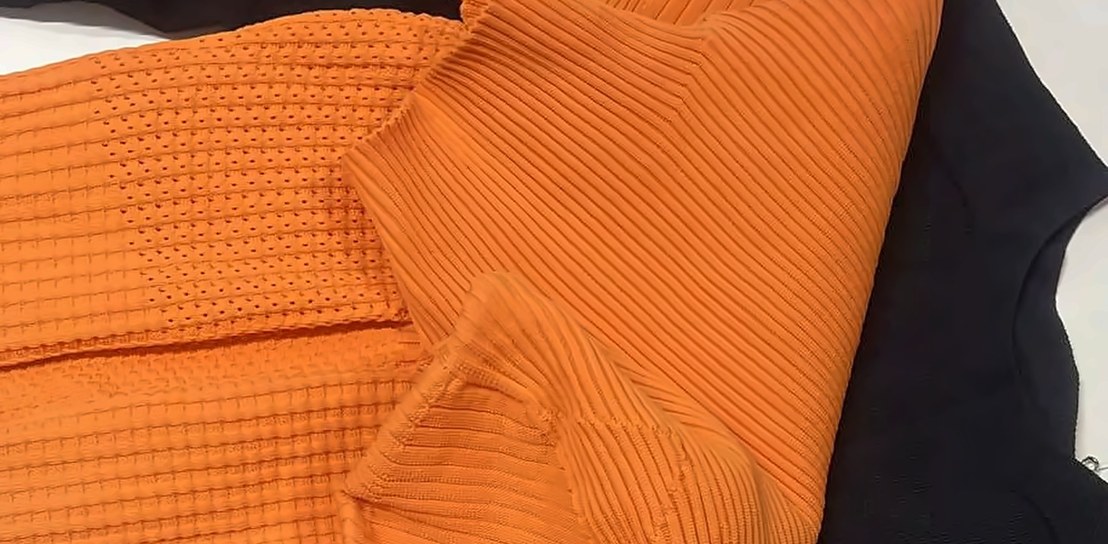
Knitwear

Seamless 3D knit with breathable zones against the skin and stronger zones carrying the load.
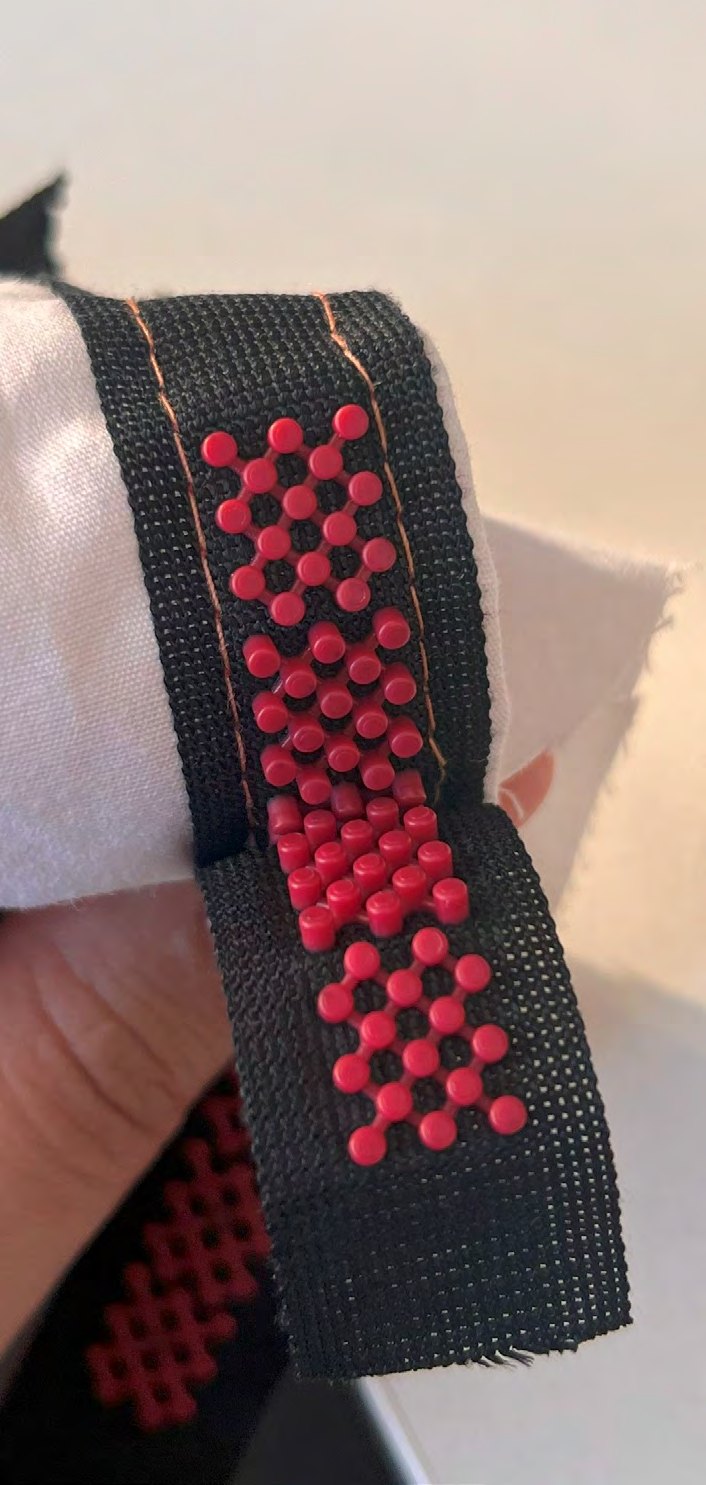
3D knit sample
Knitted sample testing stretch, structure and ventilation.
Knitted wearable prototype
Seamless knit prototype with reinforced carrying zones.
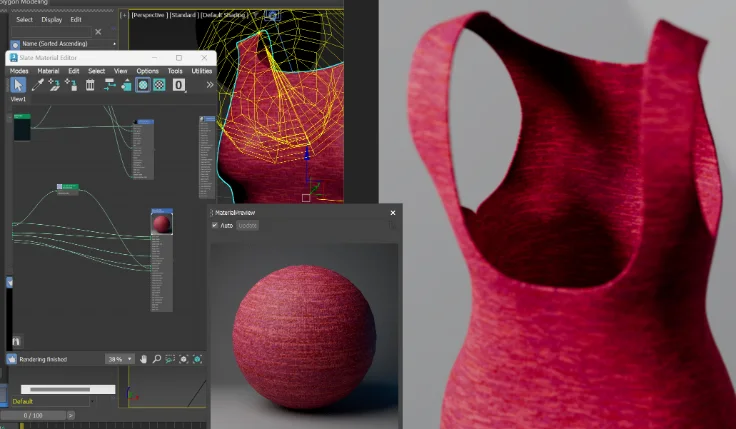
CLO3D wearable simulation
Digital comparison of belt, short vest and long vest.

06 INTERFACE

From five button presses to certainty at a glance

In shortShow all essential readings together, keep time left visible and turn every alarm into a clear next step.
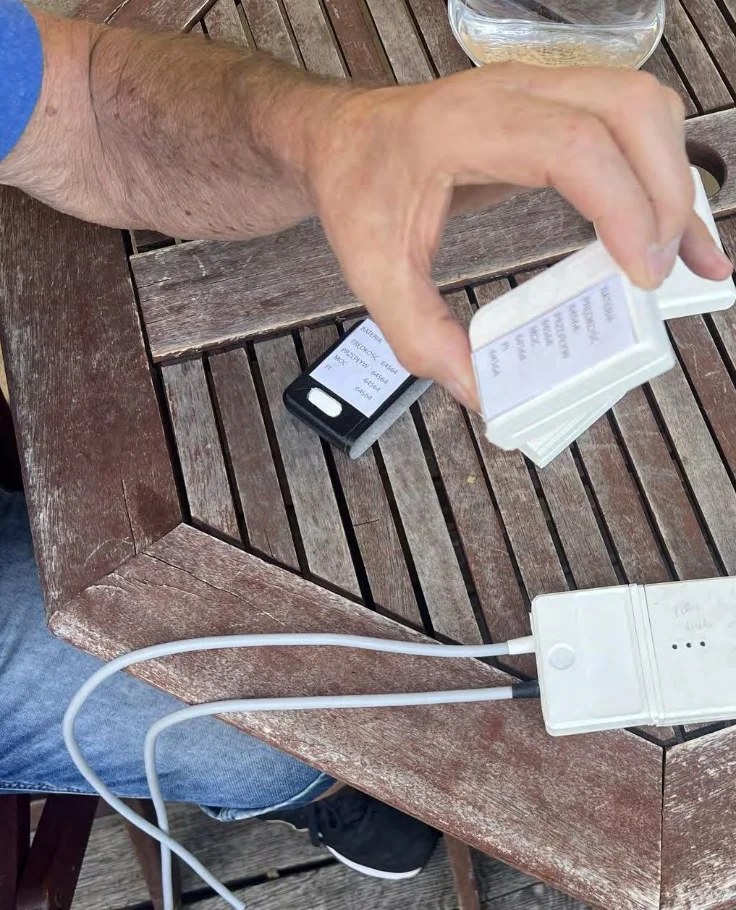
Patients must check the device, but they do not want to keep looking at it. I began by auditing the HeartMate 3 controller, then connected each research insight to a design decision.
TODAY · HEARTMATE 3

One value per press

1× pressSpeed
2× pressFlow
3× pressPI
4× pressPower
5× pressBackup
  • Up to five presses to see all readings.
  • Battery level shown mainly as LED bars.
  • No plain-language next step.

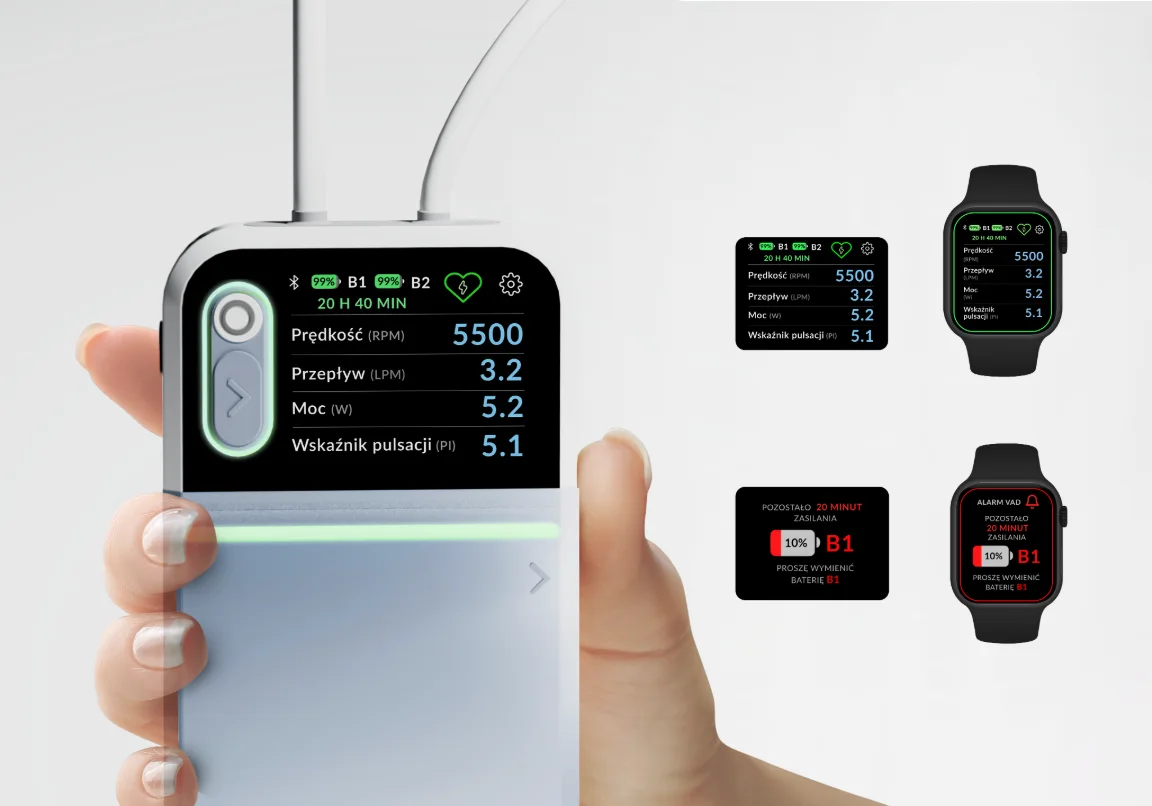
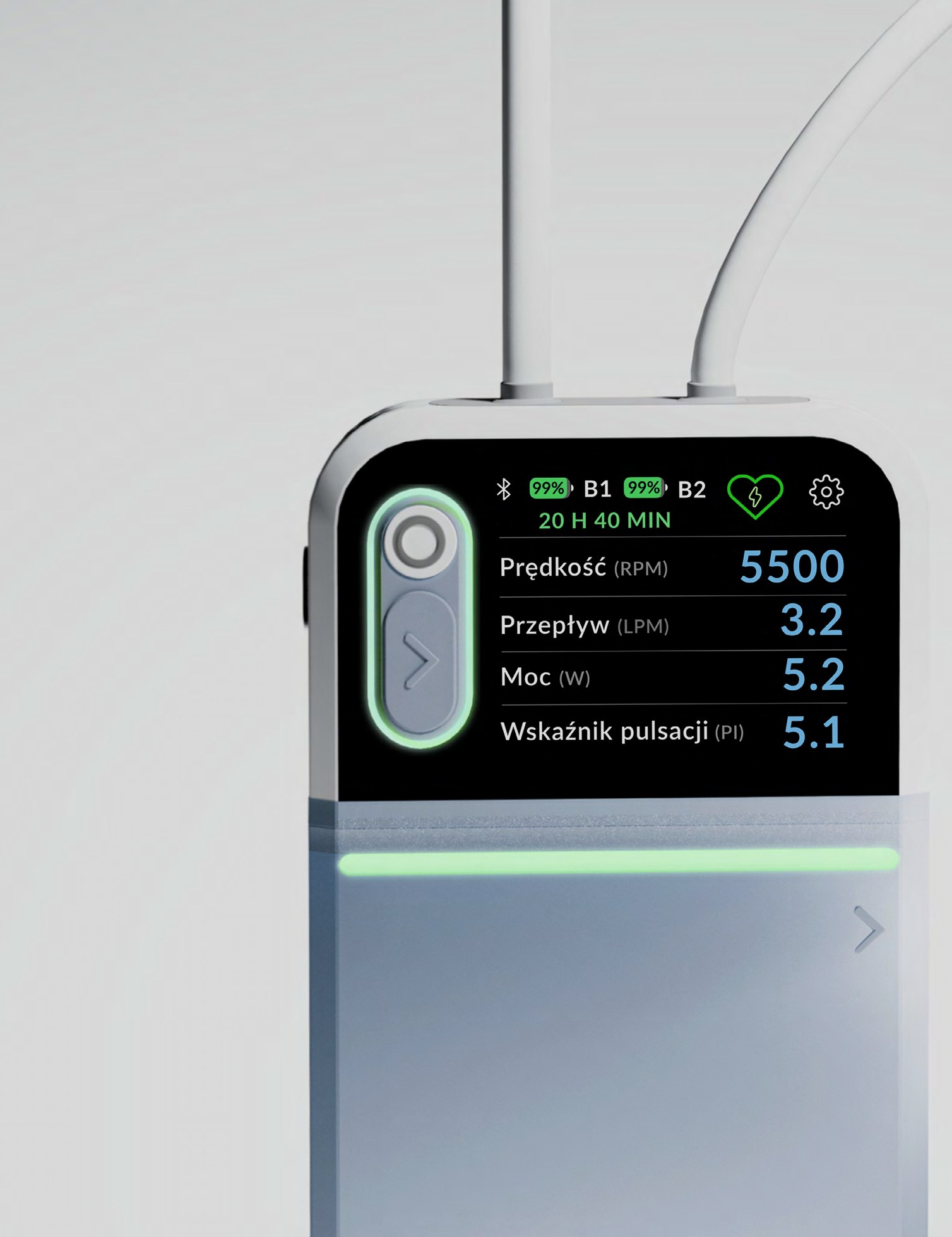
My controller

B1 99%   B2 99%20 h 40 min
Speed RPM5500
Flow LPM3.2
Power W5.2
Pulsatility PI5.1

— All four readings on one screen, at a glance — 0 extra presses.

— Each battery in % plus the time left in hours and minutes.

— Alarms in plain words, always with the next step.

5

presses needed today

< 5 min

left when the current icon turns red

18 px

minimum text after readability tests

3 screens

controller, phone and watch

3 · FROM INSIGHT TO DECISION

01

Constant checking of the battery causes stress, fear and worry.

Systematic review

The time left is always at the top of the screen, and a light strip shows the status from a distance — green when all is well, red for an alarm.

02

People want to check discreetly — in a seminar, a café, at the cinema.

Patient quotes

The screen is mirrored on the phone and the watch; less critical alarms can be a vibration only.

03

A phone can run out of battery.

Analysis

The screen stays on the controller as the independent source of truth. It is larger than before; the app only adds to it.

04

Alarms are rare, and stressful when they come.

Interviews, audit

One main button wakes the screen and confirms alarms — the one the hand already knows. A low-battery alarm cannot be dismissed until the battery is replaced.

05

A message without an action leaves people guessing.

Audit

Three alarm levels, each with its own colour, sound and a plain message with the next step: “20 minutes left. Please replace battery B1.”

06

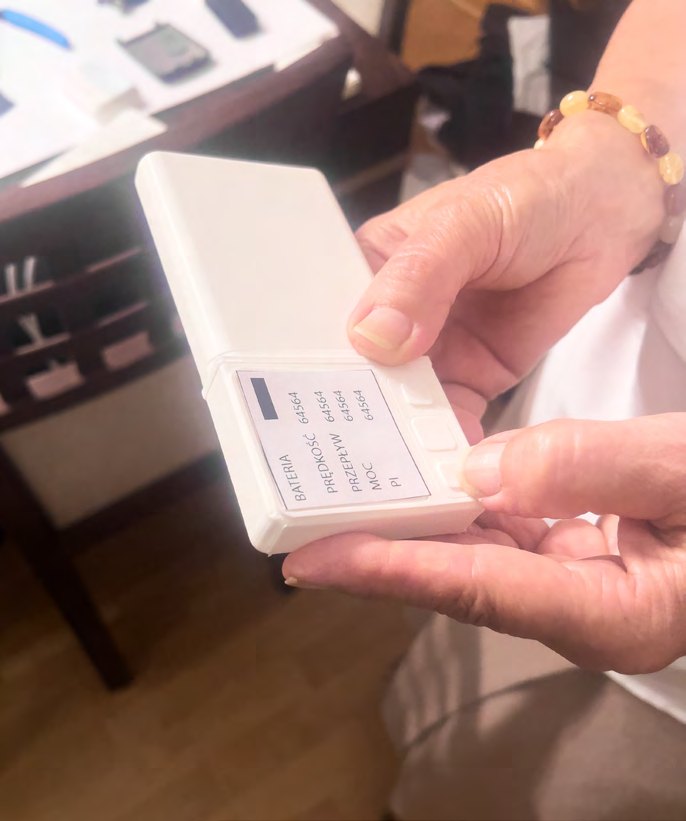
Users aged 30 to 70 held the models with one hand, often in daylight.

User tests

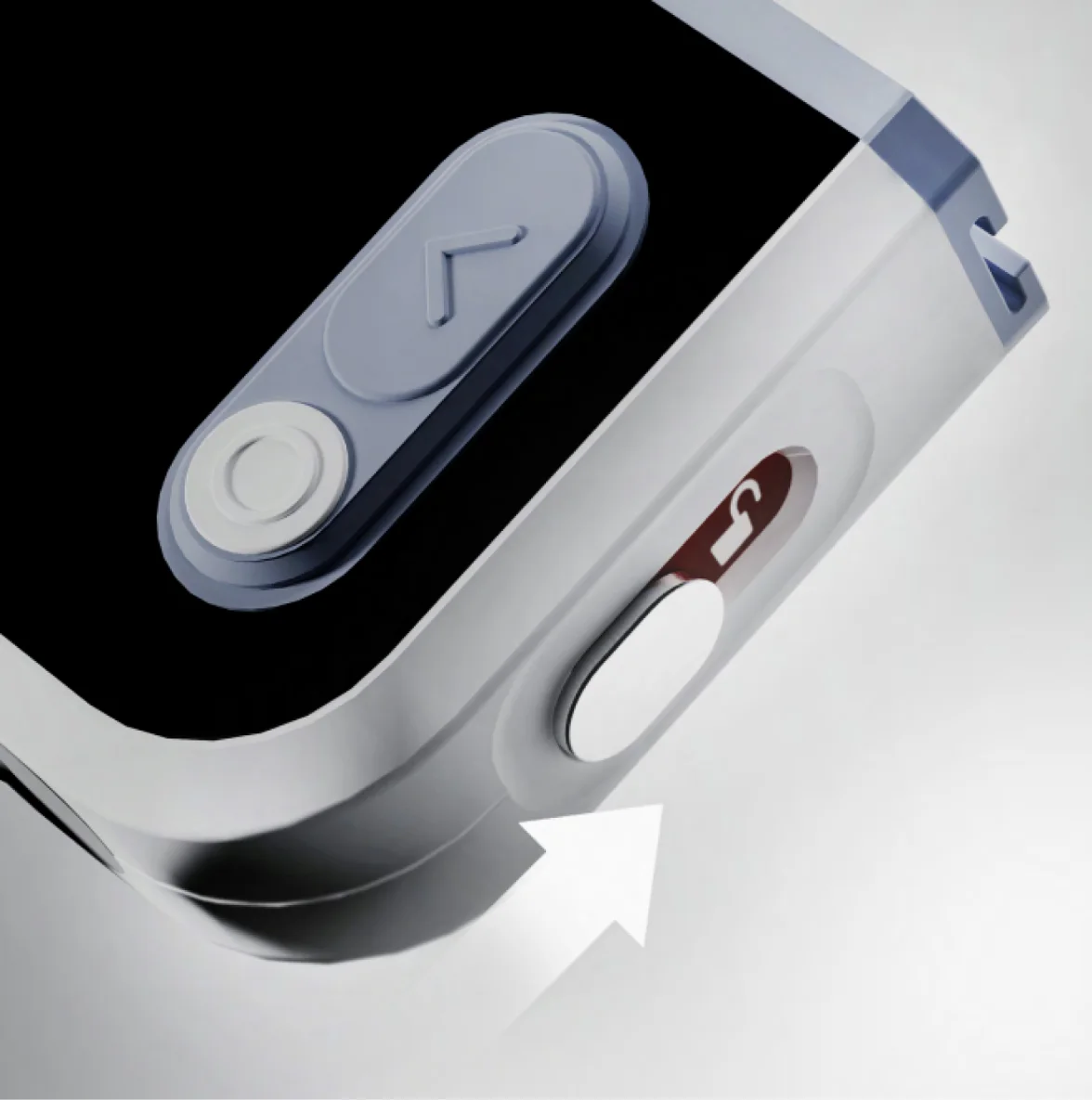
Convex buttons of at least 12 mm, all on one side, so the device works upright or sideways; 18 px text.

07

People fear the cable will be pulled out, or the battery attached wrongly.

Systematic review, interviews

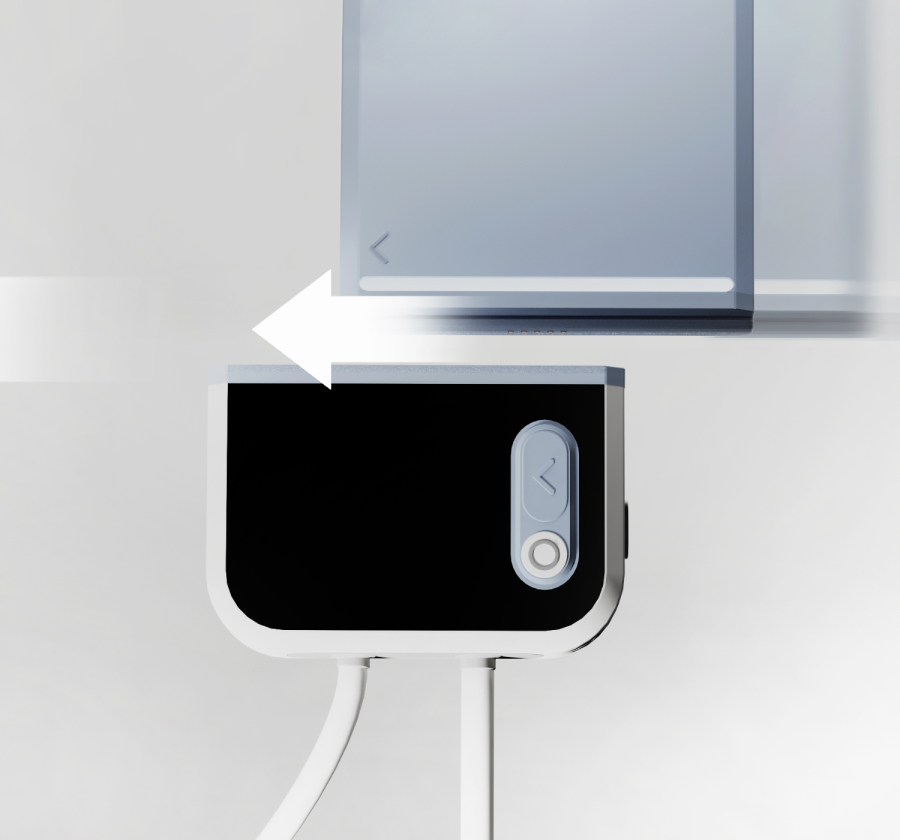
The battery slides onto a rail and can go on only one way; a lock turns green when it is secure.
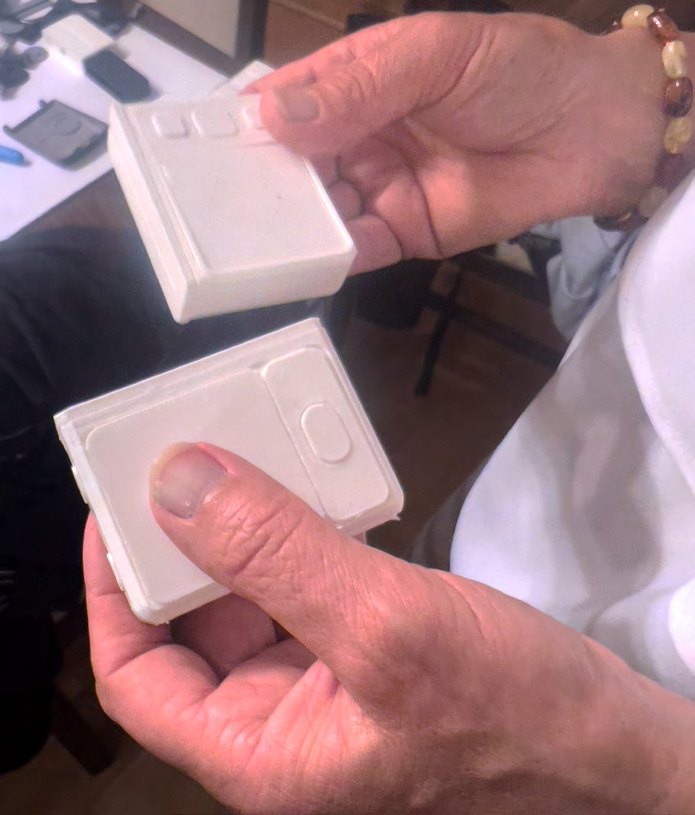
See interface testingModels, printed screens and daylight readability tests

07 THE SOLUTION

A controller that answers before you ask

In shortTwo parts instead of three, one screen with everything that matters, and the same information on the phone and wrist.
Final LVAD controller held in one hand
1

Status light

Green means the system is working; red signals an alarm, visible without taking the controller out.

2

One main button

Wakes the screen and confirms alarms — one familiar action under stress.

3

Everything on one screen

Both batteries, time left and four pump readings stay visible together.

4

Slide-on battery

It fits only one way and the lock turns green when secure.

5

Soft, rounded form

Designed for either hand, upright or sideways, with controls on one edge.

ONE SYSTEM, THREE SCREENS

The same answer, at the right level of attention

In shortThe controller is always complete. Phone and watch make routine checks more discreet.
99%B199%B2

20 h 40 min left

Speed RPM5500
Flow LPM3.2
Power W5.2
Pulsatility PI5.1
ALWAYS ON THE BODY

Controller

Independent source of truth: every reading, every alarm and the main action.

99%B199%B2

20 h 40 min left

Speed RPM5500
Flow LPM3.2
Power W5.2
Pulsatility PI5.1
PRIVATE DAILY LIFE

Phone

A discreet check without taking the controller out.

99%B199%B2

20 h 40 min left

Speed RPM5500
Flow LPM3.2
Power W5.2
Pulsatility PI5.1
SOCIAL SITUATIONS · ACTIVITY

Watch

A glance at the wrist; lower-priority alarms can use vibration.
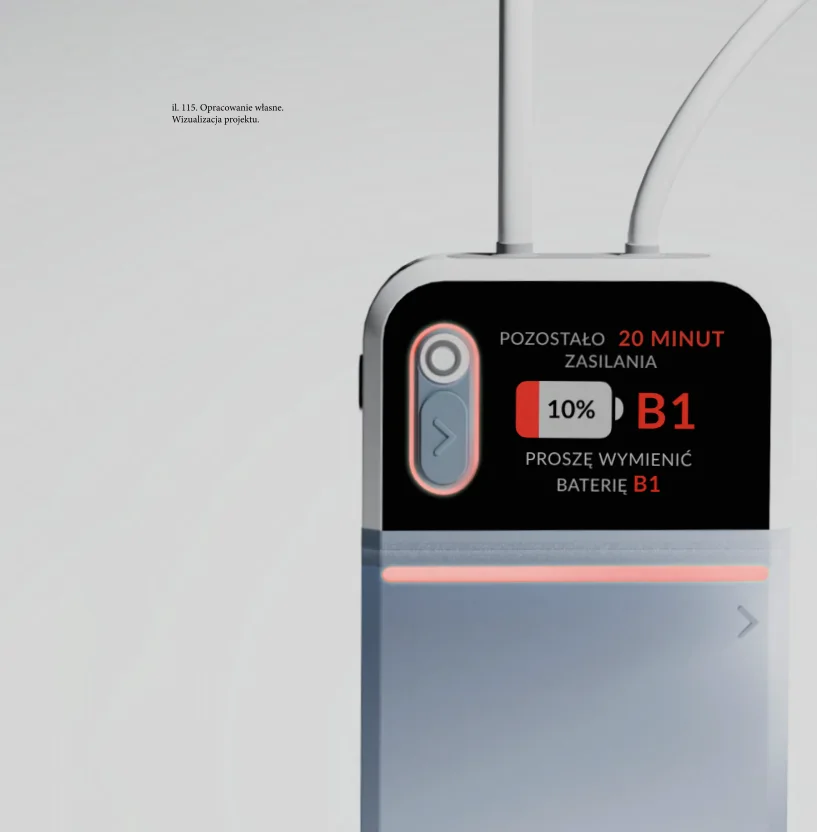
Critical alarm displayed on the LVAD controller

05 ALARMS

Three priorities. Every message says what to do next.

In shortUrgency changes the colour, sound and dismissal rule — not the clarity of the instruction.
A critical alarm takes over the screen and cannot be dismissed until the problem is solved. Lower priorities ask for attention without creating the same stress.

High priority

Direct threat: low battery or pump failure.

20 MINUTESOF POWER LEFTREPLACE BATTERY B1
Reaction
Only when solved

Medium priority

Needs attention soon: loose cable or changed readings.

CHECK CABLEWHITE CABLE IS LOOSERECONNECT THE CABLE
Reaction
After confirming

Low priority

A reminder, such as charging the backup battery.

REMINDERBACKUP BATTERYCHARGE IT TONIGHT
Reaction
When convenient

06 PHYSICAL INTERACTION

No wrong way to connect the battery

In shortThree steps provide visible and tactile feedback before the patient trusts the connection.
In tests, sliding the battery onto a rail was the easiest connection to understand.
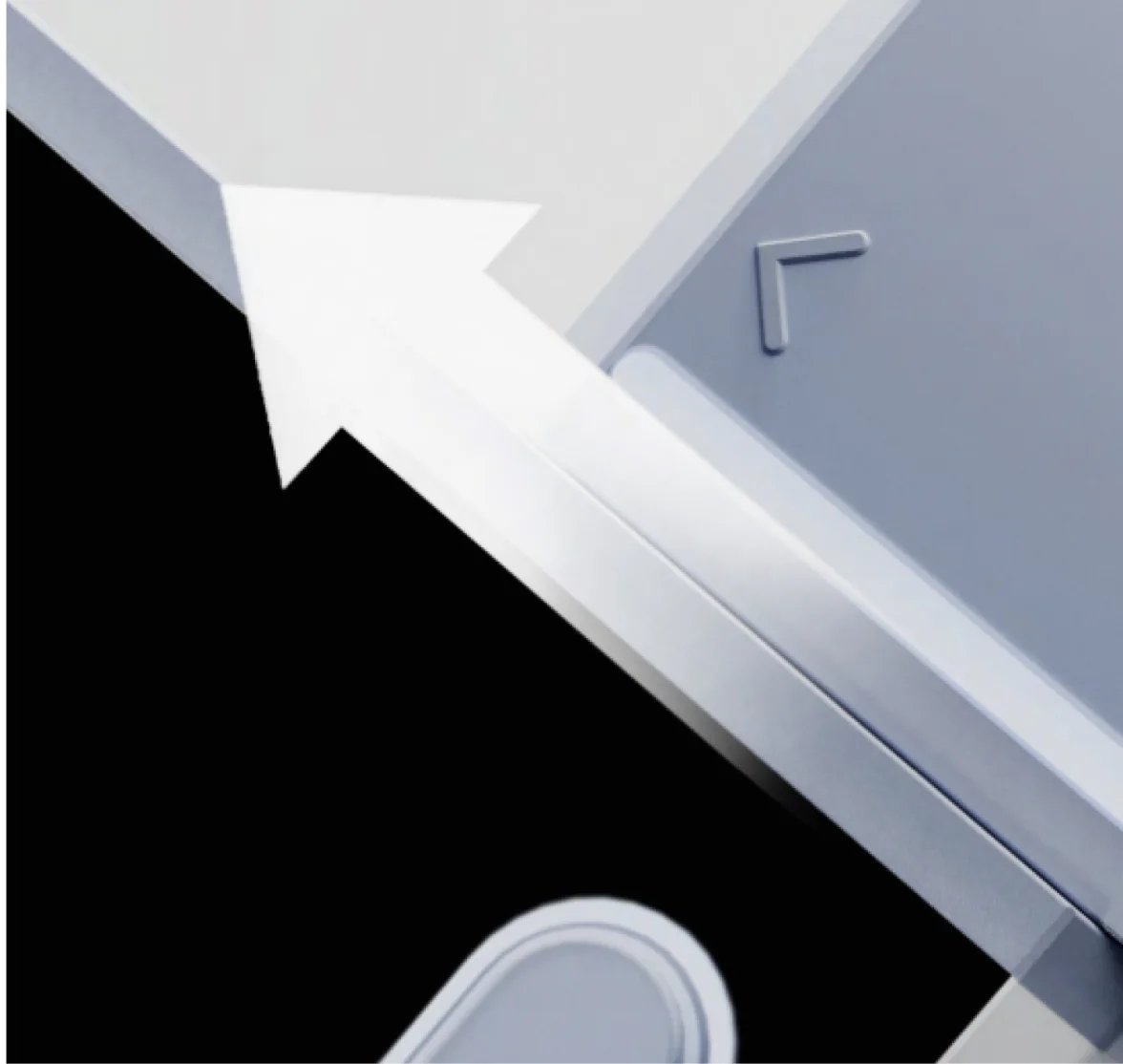
Slide it on
1

Slide it on

The rail accepts the battery in only one direction.
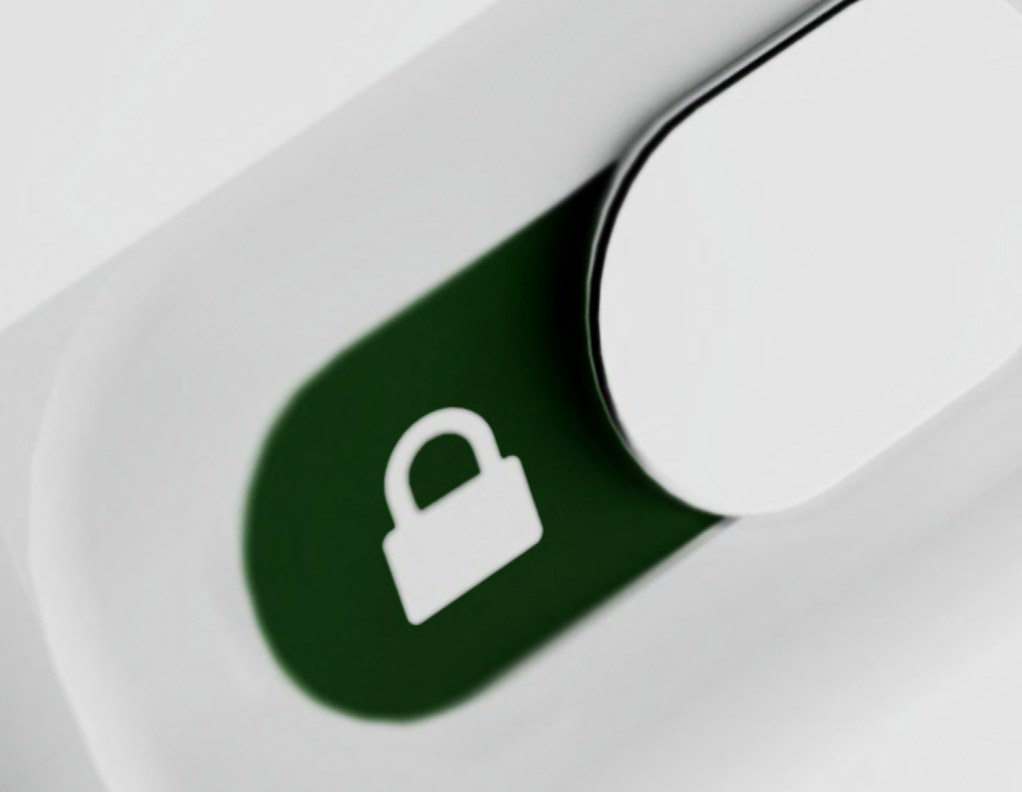
Lock it
2

Lock it

The control turns green when the connection is secure.
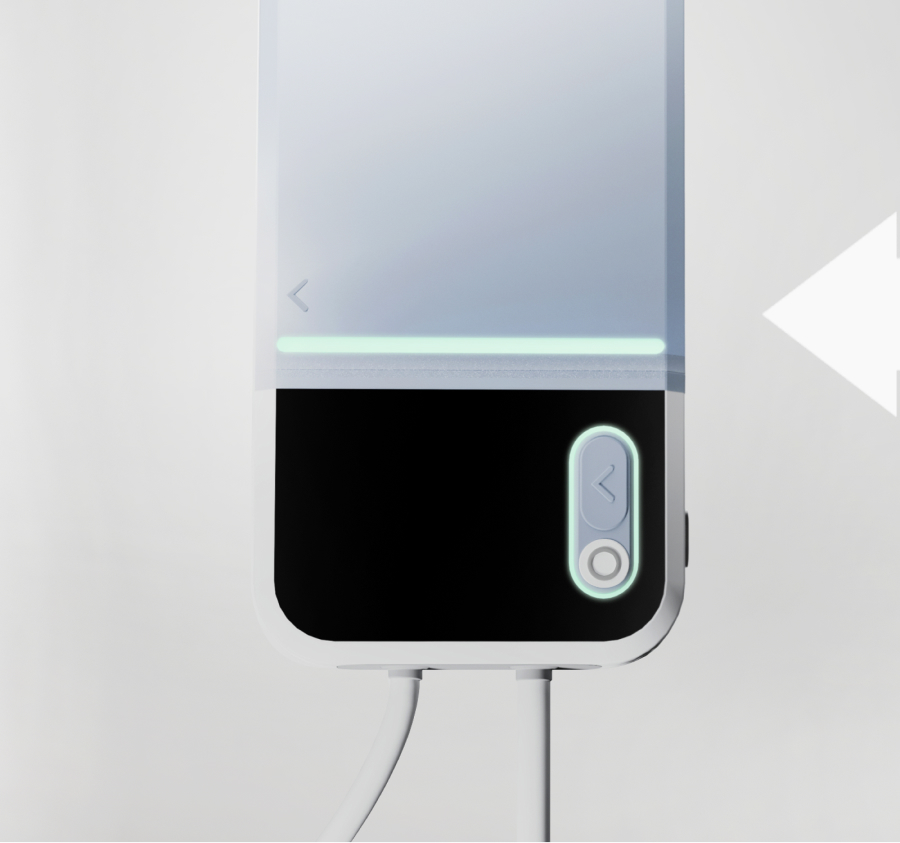
See the status
3

See the status

The light strip confirms normal operation at a glance.
Battery sliding onto the controller rail
The rail makes the direction self-evident.
Controller lock and side buttons
Buttons on one side; a lock you can see and feel.
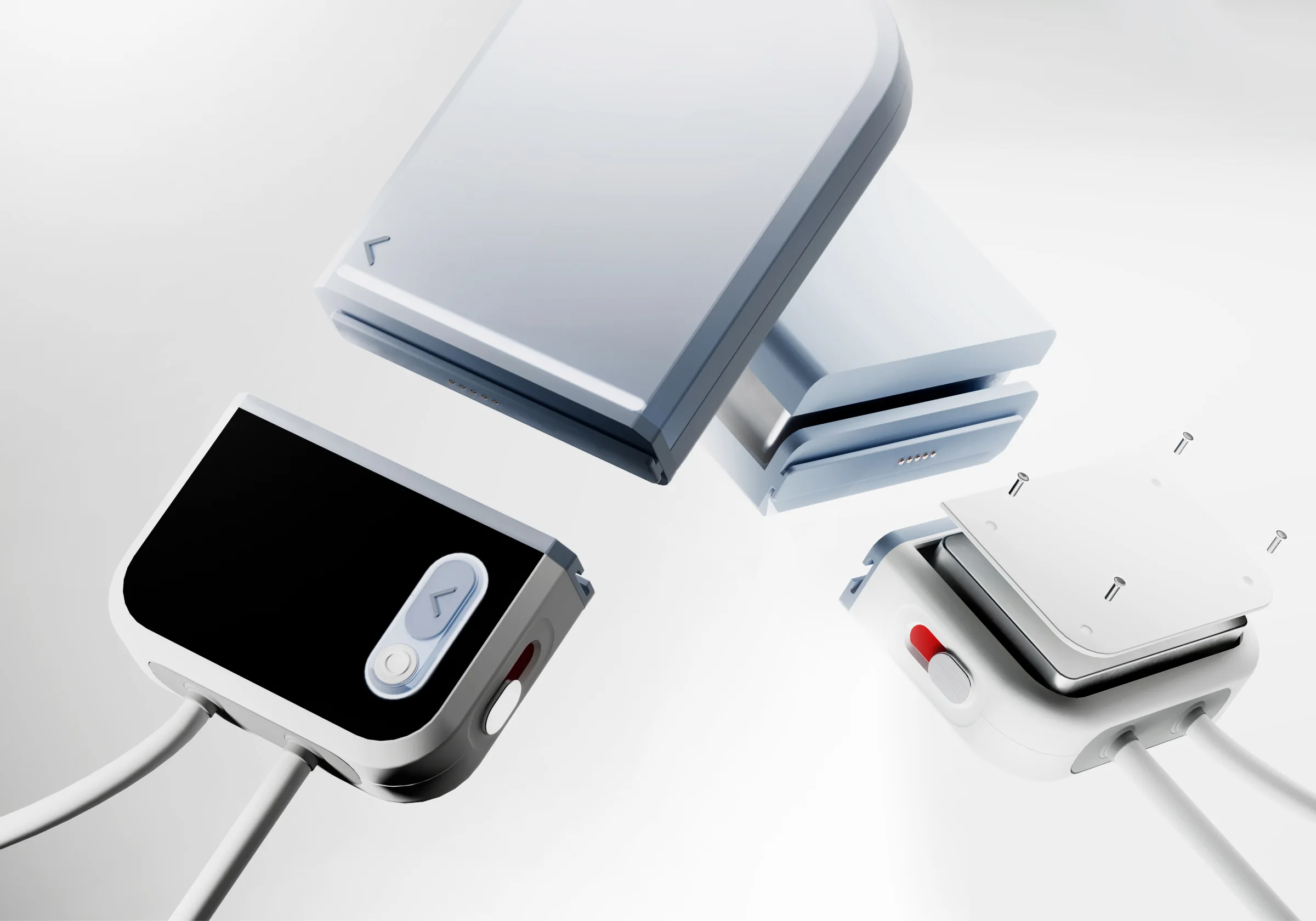
Exploded view of the LVAD controller and removable battery
Controller with a built-in battery, one slide-on spare and the back cover.

08 OUTCOME

A concept shaped by patients, clinicians and dozens of models

In shortThe final system reduces physical complexity and makes essential information easier to check, understand and act on.
3 → 2

main parts to carry and connect

~30%

less battery volume for the same energy

3 screens

one consistent interface at different attention levels

WHAT I LEARNED

In medical design, the hardest problems are often around the device rather than inside it: in clothing, habits, social situations and the small moments when a person needs certainty.